
In the process of drug discovery, characterising the binding of compounds to potential biological targets is vital for understanding molecular interactions and assessing their therapeutic potential. Characterisation of these interactions can provide valuable insights into ligand affinity, target engagement, and the effects of binding on protein stability.
The Zetasizer Core combines three analytical techniques within a single plate-reader instrument: Dynamic Light Scattering (DLS), Static Light Scattering (SLS), and intrinsic Differential Scanning Fluorimetry (DSF). Together, these complementary techniques provide comprehensive information on protein stability, aggregation behaviour, and colloidal properties.
In this application note, we examine the effect of ligand binding on the thermal stability of a target protein and demonstrate how this interaction can be used to quantify ligand potency. Using carbonic anhydrase as a model system and acetazolamide as a binding ligand, we investigate the stabilising effect of ligand binding on protein thermal unfolding and aggregation. We also demonstrate the determination of the ligand-binding EC₅₀ parameter using thermal shift analysis.
The EC₅₀ (half-maximal effective concentration) is the concentration of a ligand required to produce 50% of the maximum observed effect. It is a widely used parameter for quantifying ligand potency and provides a measure of the strength of the interaction between a ligand and its target. In thermal shift assays, the EC₅₀ is determined from the concentration-dependent increase in protein thermal stability induced by ligand binding.
Bovine carbonic anhydrase (CA) was diluted to 0.5 mg/mL in 1× PBS. Acetazolamide was dissolved in DMSO to a stock concentration of 10 mM and serially diluted 1:1 in DMSO to generate a ten-point concentration series ranging from 19.53 µM to 10 mM. Aliquots (3.15 µL) of each acetazolamide dilution were added to 101.85 µL of the carbonic anhydrase solution, resulting in a final DMSO concentration of 3% in all samples. This produced a final acetazolamide concentration range of 586 nM to 300 µM.
The resulting samples were incubated briefly to allow ligand binding before thermal stability measurements were performed using the Zetasizer Core. Maintaining a constant DMSO concentration across all samples ensured that any observed changes in protein stability could be attributed to acetazolamide binding rather than solvent effects.
The thermal stability of bovine carbonic anhydrase in the presence of acetazolamide was assessed using DSF and SLS. Five replicate aliquots (20 µL each) of each sample were dispensed into individual wells of a 384-well Aurora round-bottom microplate. A clear adhesive film was applied to the plate to minimize sample evaporation during analysis. Samples were subjected to a thermal ramp from 25 °C to 95 °C at a rate of 1 °C/min, SLS and fluorescence measurements were acquired at 1°C intervals for each sample well throughout the temperature ramp. A buffer-only well was included as a blank control, and all data were corrected by blank subtraction during analysis using ZS Discover software.
The addition of acetazolamide to CA had a stabilising effect on the protein's thermal stability. DSF thermal unfolding profiles demonstrated a progressive increase in melting temperature (Tm) with increasing acetazolamide concentration, indicating enhanced protein stability upon ligand binding. SLS data similarly showed a shift towards higher aggregation temperatures (Tagg) as the acetazolamide concentration increased, suggesting improved resistance to thermally induced aggregation.
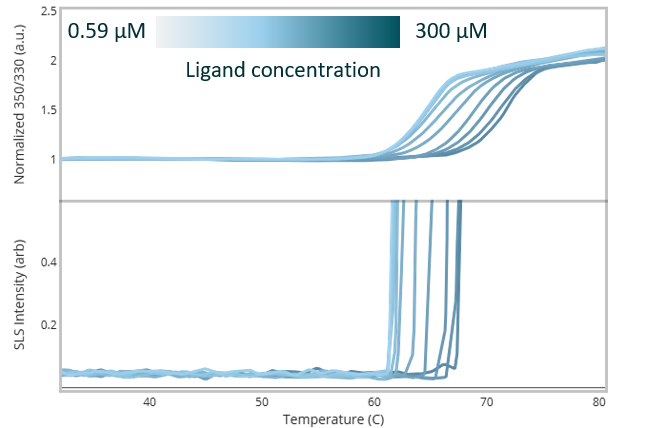
Figure 1. Thermal ramp analysis of CA with different concentrations acetazolamide. Top) DSF data, normalised 350/330 nm fluorescence ratio plotted against temperature. Bottom) SLS intensity plotted against temperature.
| Ligand concentration (µM) | Tm (°C) | Tm SD | Ton (°C) | Ton SD | Tagg (°C) | Tagg SD |
|---|---|---|---|---|---|---|
| 300 | 71.6 | 0.17 | 68.5 | 0.32 | 64.7 | 0.23 |
| 150 | 71.1 | 0.06 | 67.7 | 0.16 | 64.4 | 0.17 |
| 75 | 70.0 | 0.02 | 66.7 | 0.12 | 63.4 | 0.13 |
| 37.5 | 69.0 | 0.05 | 65.6 | 0.09 | 62.4 | 0.17 |
| 18.8 | 67.5 | 0.13 | 63.6 | 0.14 | 61.0 | 0.28 |
| 9.38 | 66.4 | 0.27 | 62.2 | 0.09 | 60.6 | 0.59 |
| 4.69 | 65.4 | 0.21 | 61.4 | 0.28 | 60.4 | 0.21 |
| 2.34 | 64.9 | 0.20 | 61.4 | 0.11 | 60.3 | 0.26 |
| 1.17 | 64.9 | 0.09 | 61.3 | 0.14 | 60.0 | 0.43 |
| 0.59 | 64.6 | 0.08 | 61.3 | 0.11 | 59.3 | 0.58 |
| Control | 64.2 | 0.09 | 61.2 | 0.05 | 59.1 | 0.15 |
The ZS Core system simultaneously provided a comprehensive assessment of both protein thermal stability and aggregation behaviour. The calculated melting temperature (Tm), onset temperature of unfolding (Ton), and aggregation temperature (Tagg) for CA in the presence of increasing concentrations of acetazolamide are presented in Table 1. The effect of acetazolamide concentration on protein stability is further illustrated in Figure 2, where Tm and Tagg are plotted as a function of acetazolamide concentration.
The control sample containing CA in PBS supplemented with 3% DMSO exhibited a Tm of 64.2 °C. Increasing acetazolamide concentrations resulted in a concentration-dependent increase in thermal stability, consistent with specific ligand binding to CA and stabilisation of the native protein structure. At the highest acetazolamide concentration tested (300 µM), the Tm increased to 71.6 °C, corresponding to a thermal shift (ΔTm) of 7.4 °C relative to the control. This substantial increase in Tm indicates strong ligand-mediated stabilisation of the native CA structure and demonstrates the ability of acetazolamide binding to enhance resistance to thermal unfolding.
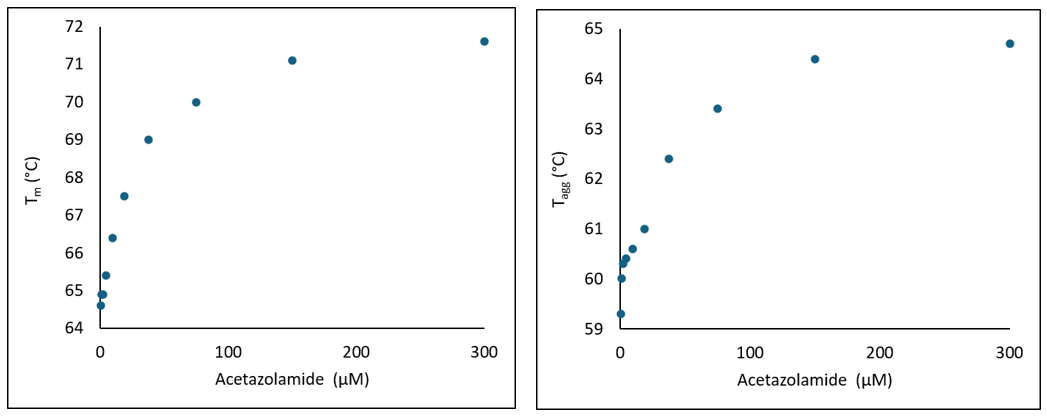
Figure 2. Tm and Tagg of CA plotted against ligand concentration.
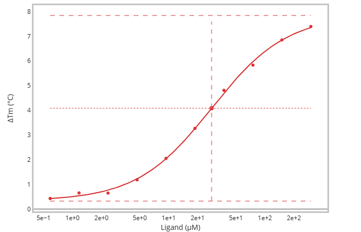
Figure 3. ΔTm of plotted against log acetazolamide ligand concentration (µM).
When the calculated ΔTm values were plotted against the logarithm of the acetazolamide concentration, a sigmoidal dose-response curve was obtained. The midpoint of this thermal shift assay corresponds to the EC50 value, representing the concentration of acetazolamide required to achieve 50% of the maximum stabilising effect. Using the ZS Discover software, the EC50 for the interaction between acetazolamide and carbonic anhydrase was calculated to be 27.7 µM (Figure 3).
The high-throughput design of the Zetasizer Core enables rapid thermal shift assay analysis using its intrinsic DSF capabilities, while simultaneously providing complementary protein stability information from the SLS detector response. The easy-to-use, plate-based format integrates seamlessly into existing laboratory workflows, allowing efficient screening of multiple samples in a single experiment.
The addition of a binding partner, such as acetazolamide, resulted in enhanced protein thermal stability, demonstrated by concentration-dependent increases in both Tm and aggregation temperature. Furthermore, thermal shift analysis enabled the determination of the ligand-binding EC₅₀ value, providing a quantitative measure of ligand potency and target engagement. Together, these capabilities highlight the utility of the Zetasizer Core as a powerful platform for characterising protein-ligand interactions, assessing protein stability, and supporting drug discovery workflows.